Creating a Scalable Infrastructure in One Week
Guess the Throne

Guess the Throne
The team at Caldera was wild about Game of Thrones, so naturally, we wanted to get involved in a death pool for the final season. A death pool is similar to a March Madness bracket: you select who you think out of the major characters will live or die. One point was awarded for each correct guess at the end of the season. Potential point totals were updated after each round (episode), and he/she with the most points at the end of the season won.
However, after scouring the internet, we could not find one Death Pool which suited our needs.
So we made one, keeping these desires in mind:
- The ability to create a group for friends to submit entries to and compete in
- A simple live/die option to simplify submissions and ensure participation
- An automatic scoring algorithm to keep things easy and fair
The thought which prompted this endeavor occurred only one month before the premiere of the season, so the timing was tight. We wanted to get a functioning product in the hands of fans as early as possible. An early design surfaced after two days and a functioning code base in three.
Minimum Viable Product
The faster our product was up and public, the more time we would have to bring users on board. We wrote a list of the minimum functionality required to launch the site:
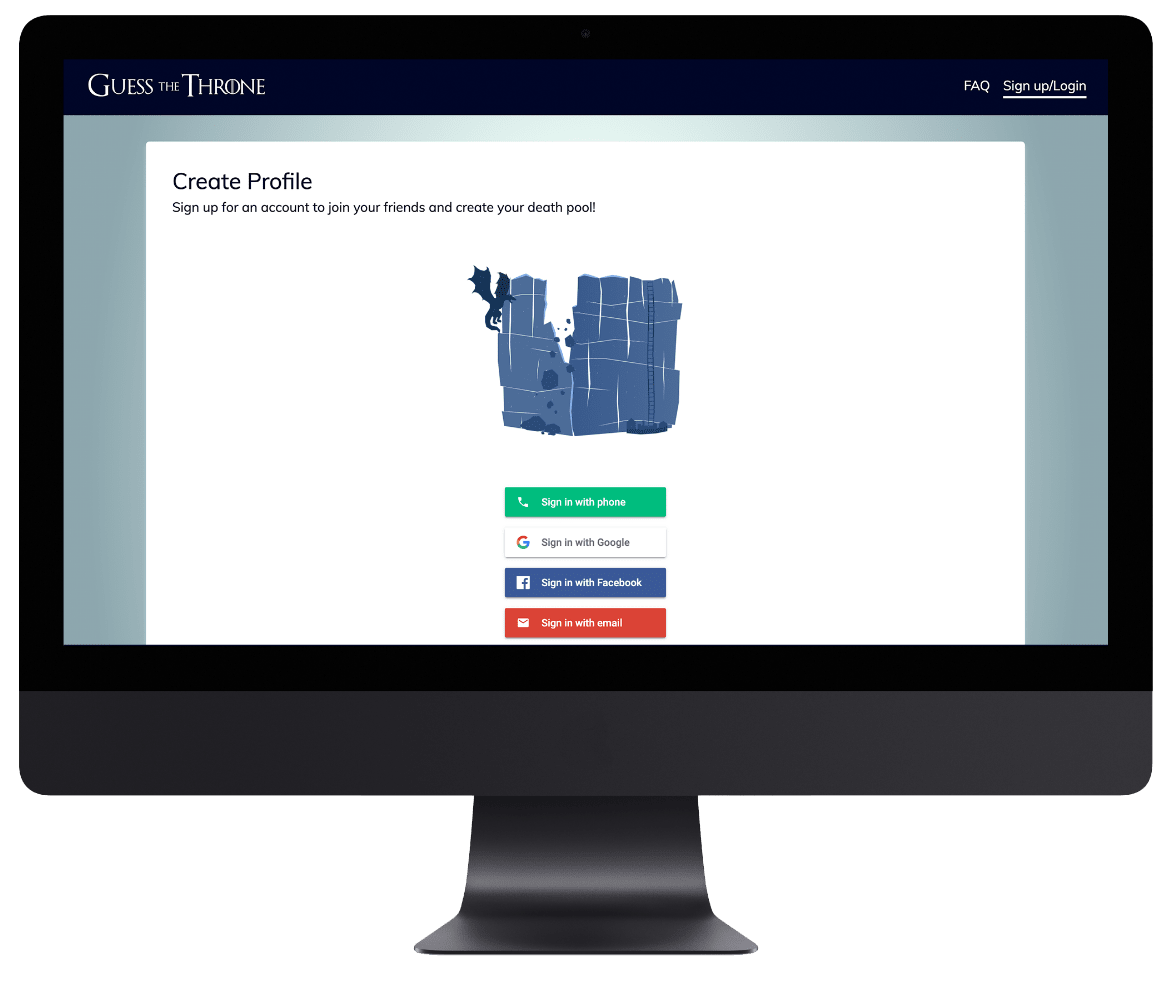
- Secure Login
- Group Creation or Joining
- Death Pool Creation and Submission
- The ability to share with friends via social media
Nothing else was designed or developed for the 1.0 launch. There was no scoring engine and no way to edit entries. We handled support requests via email to get a sense of user needs and built additional features when they were repeatedly requested. This cut down our runway from initial design to official launch to only one week.
Infrastructure
Initial research and gut instinct indicated this idea had the potential to go global, so we chose a tech stack that could scale with us through rapid growth: Firebase and Netlify. Firebase allowed us to avoid the creation of a complex, scalable infrastructure and focus on building the app. For application deployment, we chose Netlify for their global CDN and blazing-fast performance.
Tech Stack
The quicker we built the app, the more people could join. We utilized React, Styled Components, Jest, and Node to rocket our way to a launchable 1.0.


Marketing

Passion projects such as this allow us to try unconventional marketing techniques for potential use with future clients. We opted this time to hit the ground hard and fast with a budget of only $150. The cost for social ads and other forms of marketing have increased dramatically over the years, and we determined that virally engaging with the loud, global GoT fanbase would be our best bet. Through partnering with Game of Thrones podcasts and starting with a passionate base, we were able to grow our application for free.
We tried to exhaust all avenues of free and earned media before dipping into our limited budget. We figured ProductHunt.com, a community meeting place for makers and coders, could help us launch to an appreciative and well-connected audience. We ran a campaign in an attempt to rank among the top five products of our selected launch day, which would have won Guess The Throne a spot on their international newsletter. Despite converting over 1,200 people to signing up, we finished in eighth place, with a greater admiration for the site and tech entrepreneurs everywhere.
Eventually, we decided to try our hand at influencer marketing. We quickly discovered that not many people were interested in promoting our project for free, so we moved on to paid broadcasting and had a mega-fan send out a tailored tweet to over 500k Game of Thrones fans. We had over 80 people on our site within minutes and converted over 250 people in a span of two hours. The cost per acquisition was $0.20. Influencer marketing seemed to be the right move.

At the same time, we wrangled the team at Barstool Sports to our side. After a careful exchange, we got the entire GoT-watching Barstool Sports staff on board, along with thousands of their fans. Barstool ran a podcast breakdown of GoT throughout the season, which referenced ‘Guess The Throne’ every week. A lot of effort went into Twitter messaging, but we eventually struck gold.
We relied on social listening tactics throughout the campaign. Queries for "death pool," "Game of Thrones," "GoT," and clever combinations of more specific keywords yielded excited fans who would go on to act as ambassadors for the site. And most importantly, they were free.
We cannot overstate the importance of interactivity and *personality.* You need to be everywhere someone could search for your product and be available to answer their questions promptly. However, there is a fine line between attentive and spammy, so learning which demographics and communities were skeptical of businesses was a valuable experience. All in all, we experienced massive growth in only three weeks of promotion for a grand total of $130.58.

Results
We amassed over 500 users within 72 hours of launch. That momentum snowballed until the minute the show premiered. We received over 1,300 page views per minute in the moments before the first episode and closed submissions with over 44,000 signed up users. Our infrastructure scaled with us beautifully, and we successfully avoided any loss of service due to our fans' frenzy.
Where it is Now
There were two stages in the life cycle of ‘Guess The Throne.’ Before the premier and after. Beforehand, the primary goal was to reach new markets to bring on fans and create groups. After the premiere, it was all about stoking the fire with social media interaction and live updated scoreboards for our groups. We also provided in-depth analytics of our community's selections, against both each other and the posted Vegas odds (you really can bet on anything in Vegas).
GuessTheThrone.com was not created to make money. However, a reasonable effort to make our user base aware of the personal expenses incurred seemed morally just. We also figured we could do some more good by splitting any donations to our site 50/50 with Emilia Clarke's ‘Same You Foundation’ for youths' recovery from brain injury and stroke. We only accepted a cut until our costs were met, then all proceeds funneled to the foundation.
We decided to include a subtle tab on our site which directed users to the donation page, which included a heartfelt thank you from us at Caldera and information on the Same You Foundation.
What a ride.